HomeStatesDistrict of Columbia

District of Columbia Locksmith Help — Verified, Local, 24/7

One free call connects District of Columbia callers with independent local locksmith pros. Licensing facts, vetting steps, and every city we cover.

📞 Call (866) 370-8695
Independent Local Pros
24/7 Call Answering
No Prices Quoted — Ever

Locksmith Call Now is a free referral service — we are not a locksmith. The independent local pro you're connected with quotes you directly before any work begins.

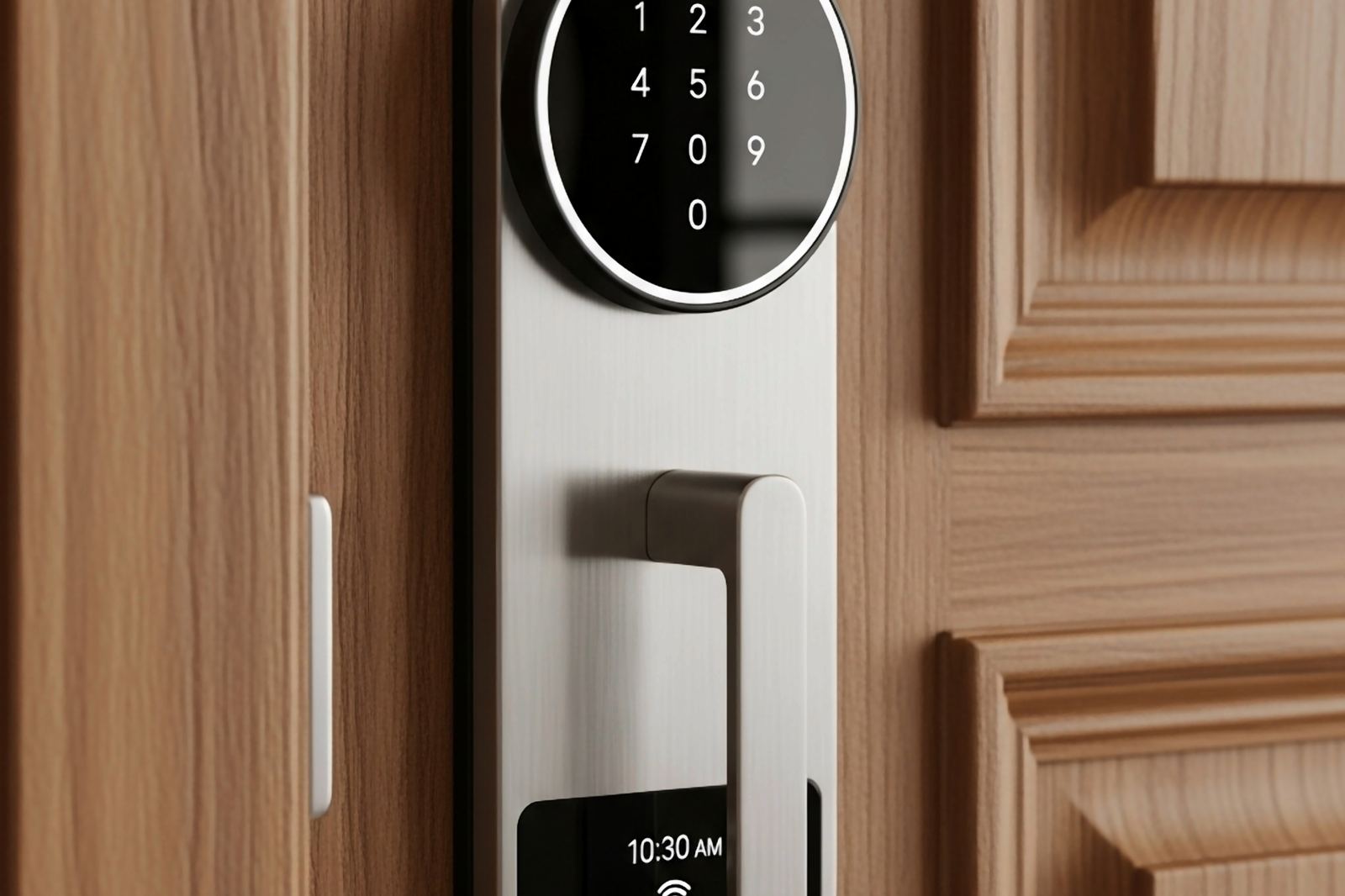
smart lock — locksmith services in District of Columbia

Nearly six in ten District households rent — 58.9 percent, the highest share anywhere we operate — so the typical DC lock question is less about replacing a suburban deadbolt and more about lockouts, building access, and what a tenant may touch without calling the landlord first. The District issues no occupation-specific locksmith license; instead, businesses operating in DC generally hold a Basic Business License from the Department of Licensing and Consumer Protection, which you can check yourself in the Scout lookup tool. The hardware being serviced is old: DC's median home dates to 1957, and the rowhouse stock across Capitol Hill, Petworth, and Shaw carries original mortise locks, layered retrofits, and doors that have settled for generations. Humid summers swell those doors; winters bring occasional ice and freeze-thaw movement. We are a referral service, not a locksmith — we connect District callers with independent local professionals, and this page covers how to vet them.

NOstatewide locksmith license (1 of 28 covered states without one)

Only 12 of the 40 states we cover license locksmiths at the state level. District of Columbia's posture changes how you vet a pro — the decoded panel below gives you the exact steps.

District of Columbia locksmith licensing, decoded

Licensing for locksmiths in District of Columbia works like this: District of Columbia has no statewide locksmith license. The District does not issue an occupation-specific locksmith license, but businesses operating in DC generally must hold a Basic Business License (typically in the General Sales and Services category) from the Department of Licensing and Consumer Protection. Consumers can verify a Basic Business License using DC's Scout lookup tool at https://scout.dcra.dc.gov/. As the District functions as both city and licensing jurisdiction, the Basic Business License requirement is the primary check; there is no separate locksmith trade license listed by DLCP's Occupational and Professional Licensing division. Treat the lookup as part of the call — legitimate pros expect and welcome it.

CheckHow
Step 1Ask the locksmith company for the business name on its DC Basic Business License.
Step 2Verify the Basic Business License in the District's Scout lookup at https://scout.dcra.dc.gov/ and confirm it is active.
Step 3Confirm the invoice and the technician's company identification match the licensed business name.

Recent change: The District's business licensing functions moved from the former Department of Consumer and Regulatory Affairs (DCRA) to the Department of Licensing and Consumer Protection (DLCP) in a 2022 agency reorganization.

Why this matters: in the vertical Google itself took to federal court over fake listings, the credential check is the one filter a bait operation can't fake. Sixty seconds with the official lookup beats an hour of review-reading — and a legitimate pro will never bristle at being checked.

Vetting checklist for District of Columbia

  • DC issues no locksmith-specific license, so ask the company for the exact business name on its DC Basic Business License, typically in the General Sales and Services category.
  • Verify that Basic Business License in the District's Scout lookup (https://scout.dcra.dc.gov/) and confirm it is active.
  • Confirm the technician's company identification and the invoice both match the licensed business name — a mismatch is reason to stop.
  • Check the company's address on a map with street view; ads borrowing prestige addresses with no actual presence are a known pattern in the District.
  • Get an itemized estimate — service call, labor, parts, after-hours surcharge if any — before booking, and get it in writing.
  • Per FTC guidance on locksmith scams, be wary of dispatchers who answer with a generic 'locksmith service' rather than a specific business name.
  • Renters: check your lease and ask your property manager first — many DC buildings require using approved vendors for lock work, and building-covered repairs cost you nothing.
  • Ask how they will open the door: a reputable pro attempts non-destructive entry first, and drilling is a last resort, not an opener.
  • Expect a marked vehicle or matching company identification on arrival.
  • Ask for proof of liability insurance, particularly for rowhouse door and frame work or commercial storefronts.

Homes and locks in District of Columbia

The District's median home was built in 1957 — the oldest housing stock among the places we serve — and much of it far predates that, from Victorian rowhouses to early-twentieth-century apartment buildings. The hardware reflects it: original mortise locks, generations of retrofitted deadbolts stacked above them, non-standard door preps, and frames that settled long ago. Old locks fail gradually — a key that needs a jiggle is an early warning — and rowhouse doors often need alignment work as much as lock work. The encouraging part: most vintage hardware can be rekeyed or fitted with new cylinders rather than replaced, preserving original doors. When replacement is right, ask for ANSI/BHMA Grade 1 or Grade 2 hardware; that rating measures durability in a way marketing language does not.

At 58.9 percent, the District's renter share is in a class of its own, and it changes the playbook. Before calling any locksmith, call your landlord or building management: lock repairs on owner-provided hardware are commonly the owner's responsibility, many buildings have approved vendors or on-site staff, and a covered repair costs you nothing. Rekeying between tenants is widely recommended practice, though who arranges and pays for it varies by lease — read yours before changing any lock, since unauthorized changes can violate it. If you do hire independently, verify the company's Basic Business License in the District's Scout lookup first.

Our buyer network covers 290 zip codes across 4 District of Columbia communities — about 672,079 residents.

Read the District of Columbia market in one line: 290 covered zip codes across 4 communities, median household income near $111,467 in the covered areas, homes centering on a 1957 build year, and 58.9% of households renting — which is why rekeying and lockout calls dominate the line here.
The District of Columbia lock calendar

Winter

DC winters are more freeze-thaw than deep freeze, and that cycling is what moves rowhouse door frames — a bolt that glided in November binds by late January. Occasional ice storms stiffen car locks and exterior gate hardware. If a key starts needing force, get the alignment fixed before it becomes a cold-morning lockout.

Spring

Humidity arrives early and old wooden doors begin to swell, the start of the annual sticking season for the District's rowhouses. Spring is also when leasing season warms up across the apartment corridors. Test exterior locks with the door open and closed; a bolt that binds only when shut means the frame or strike needs adjusting.

Summer

Peak swamp humidity is peak door-swelling season — century-old rowhouse doors drag, and the deadbolt takes the blame for what the wood is doing. Summer is also DC's busiest turnover stretch, with group houses and apartments changing hands around leases and internships, keeping lockout and rekey demand at its annual high.

Fall

As humidity drops, swollen doors shrink back and latch gaps reappear — the season hardware rattles loose. Fall is the practical checkup window: tighten hinges, lubricate cylinders, and correct any alignment issue before winter freeze-thaw starts moving frames again. Building managers scheduling annual maintenance sensibly put door hardware on the fall list.

How calling works from District of Columbia

You call (866) 370-8695. You tell us what's locked — a front door in Washington, a car at the curb, a shop after close. We connect you with an independent locksmith professional whose coverage includes your spot. From there it's between you and the pro: they scope the job, state their quote, and only then is anything dispatched. The call is free, there's no obligation, and nothing is sold by us at any step — that's the entire referral, disclosed.

Free routes worth trying first, anywhere in District of Columbia

The free checklist first: other entrances (people forget the garage-interior door constantly), the household's other key-holders, and — for renters around Washington — the building's own lockout process, which usually costs nothing. For vehicles, your roadside membership or insurance app may already cover lockouts, and manufacturer apps unlock many recent models remotely. If any of these lands, you're done; if not, the call takes one minute.

The busiest District of Columbia markets in the network

CityResidents (ACS)Zip codesMedian build yr
Washington671,7682731957

Where District of Columbia sits in the national risk picture

FBI Crime Data Explorer estimates put District of Columbia's burglary rate at 238.2 per 100,000 residents (2024), ranking it #18 of 51 in our State Lock-Risk Study — which combines burglary rates with housing age and renter share from Census data. The full methodology and every state's numbers are published openly. See the full study.

Services District of Columbia callers ask for

Every District of Columbia community we cover

Washington Area

Rowhouses and apartment buildings dating to the 1950s and earlier make Washington one of the older housing markets a locksmith can work, and renting defines it: lease turnover drives steady rekeying, lock swaps, and property-manager calls. Buildings that age mean mortise locks, worn cylinders, and doors settled out of square over decades. Around Washington Navy Yard, controlled federal facilities sit beside residential blocks, so the residential work concentrates in the surrounding neighborhoods. Tight parking and busy schedules keep car lockouts and lost-fob calls regular. Independent pros in the District handle apartment rekeys, house lockouts, mailbox locks, and car key programming across the city.

More District of Columbia communities on the same line

Every one of these smaller District of Columbia communities is inside the buyer coverage map — no page needed, the call routes the same way:

Naval Anacost AnnexParcel Return ServiceWashington Navy Yard

A note on coverage density: our District of Columbia buyer map is compact — 290 zip codes in a handful of communities. Compact doesn't mean second-class. The same 24/7 line, the same disclosed referral model, and the same no-prices rule apply here as in our largest states, and a call from outside the mapped zips still routes to the nearest independent professional with genuine coverage of your area.

Near a state line? The same call line covers Maryland, Virginia — routing follows the pro's real coverage, not the border.

District of Columbia questions, answered

How do I verify a locksmith in Washington, DC?

DC has no locksmith-specific license, but businesses operating in the District generally need a Basic Business License from the Department of Licensing and Consumer Protection. Ask for the exact licensed business name, check it in the Scout lookup at scout.dcra.dc.gov, confirm it is active, and make sure the technician's identification and invoice match that name.

Should I rekey when I move into a DC home?

If you bought, yes — prior owners, contractors, and decades of key copies argue for it, and rekeying preserves the original hardware common in rowhouses. If you rent, ask your landlord first: many buildings rekey or change locks between tenants as standard practice, and your lease may restrict changing locks yourself without approval.

Why does my rowhouse door stick every summer?

Humidity. Old wooden doors swell in DC's summer air, so the bolt no longer meets the strike plate cleanly — the lock itself is usually fine. Test with the door open: if the bolt throws smoothly, you need a strike or door adjustment, not new hardware. A local pro can usually correct it in one visit.

I'm locked out of my car in DC — who should I call first?

Check what is already covered: roadside assistance through your auto insurer, a motor club membership, or your manufacturer's roadside program — most include lockout service. Parking garages sometimes have assistance arrangements too. If none apply, we can connect you with an independent automotive locksmith who handles unlocks, lost keys, and fob programming at your location.

How does your referral service work in the District?

We are not a locksmith and do not perform any work. When you call, we connect you with an independent local locksmith professional serving your DC neighborhood. That pro quotes their own price and works under their own business name and Basic Business License — which you can verify in Scout before they begin. Our role ends at the introduction.

What locksmith scams are common in DC?

Dense cities attract the bait-price pattern the FTC warns about: an ad quoting a tiny service fee, a dispatcher with no specific business name, an unmarked car, then a dramatically higher demand at the door with pressure to drill. Verify the Basic Business License in Scout first, insist on a written estimate, and walk away from evasiveness.

Do you handle commercial buildings in Washington?

Yes — the network includes independent pros who work storefronts, offices, and multi-tenant buildings around Washington: master-key systems, commercial-grade hardware, panic-hardware-adjacent lock work, and after-hours lockouts.

What areas around Washington are covered?

The independent pros we connect serve Washington and the surrounding communities — the zip codes listed on this page are all in the coverage map. If you're just outside them, call anyway; we'll route to the nearest working pro.

How do I verify the pro is legitimate?

In licensing states, check the state lookup — it takes a minute. Everywhere, look for a marked vehicle, photo ID, willingness to state the quote before work, and a physical business you can find. Our verification guide walks through it step by step.

📞 Call (866) 370-8695

📞 Call a Locksmith Pro (866) 370-8695