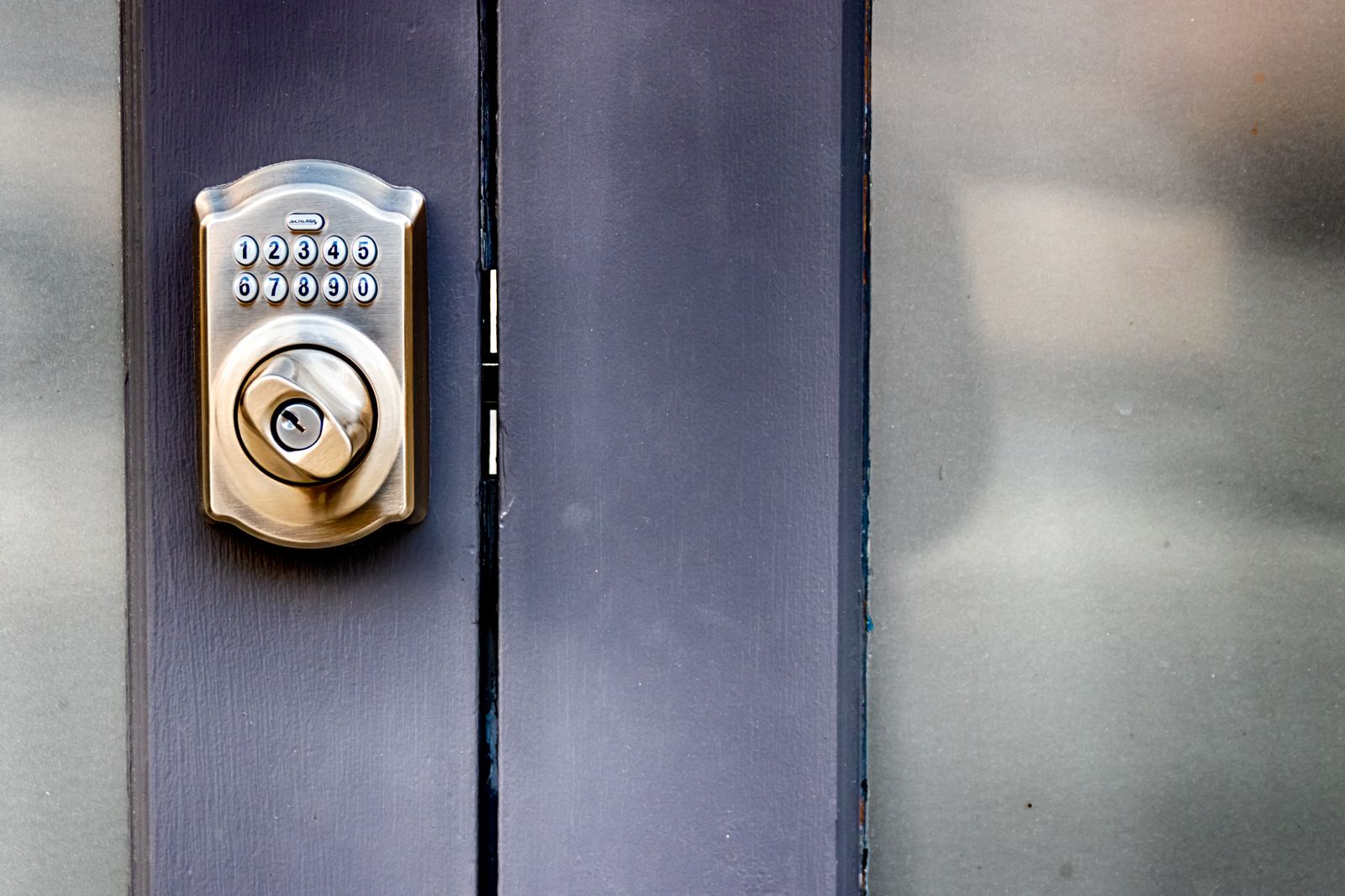
Verify three things before anyone touches your lock: the business, the price, and the person. Only around a dozen states license locksmiths, so in most of the country you are checking business fundamentals instead — a real street address, matching business name, and insurance. Everywhere, insist on a written total price before work begins, and expect a marked vehicle and ID on arrival. The Federal Trade Commission has published consumer guidance on locksmith verification since 2008.
Try these free routes first
Check the state license registry — if your state has one
Roughly a dozen states license locksmiths — the list has included Alabama, California, Connecticut, Illinois, Louisiana, Maryland, Nebraska, New Jersey, North Carolina, Oklahoma, Texas, Tennessee, and Virginia, though programs change, so confirm with your state. In licensing states, ask for the license number on the phone and look it up in the state's online registry before booking; a legitimate licensee gives it without hesitation. Texas and California, for example, run searchable databases through their licensing agencies. Refusal or evasion when you ask ends the call.
Map the street address before you book
Take the address from the listing or website and drop it into a map with street view. A legitimate shop resolves to a storefront, an office, or at minimum a plausible commercial location — not a vacant lot, an unrelated business, a mail store, or a residential building with no signage. Fake dispatch operations create hundreds of listings with borrowed or invented addresses to appear local everywhere at once. Thirty seconds of map-checking is the single highest-value free verification step for the majority of states with no license registry.
Match the name on the phone to the name on the record
When they answer, note whether they answer with a specific business name or a generic greeting like locksmith service — the generic greeting is a documented hallmark of national call-center dispatchers, flagged in the Federal Trade Commission's consumer guidance. Then check that the business name appears in your state's business registration database, which every state offers free online through the secretary of state or equivalent. Name on the ad, name on the phone, name on the registration, and later name on the invoice should all agree.
Get the total in writing before anyone is dispatched
Ask for the complete price for your described job — service call, labor, parts, after-hours surcharge if any — sent by text or email before you accept dispatch. A legitimate shop can price a standard lockout or rekey within a range and will put it in writing; the pro then confirms it on arrival before starting. The FTC's guidance specifically advises getting an estimate before work begins and warns about prices that inflate on arrival. Anyone who says the tech will price it when he gets there has told you how the visit ends.
Verify the person at the door, not just the phone
On arrival, before any work: a marked vehicle or at least matching identification, a photo ID, and in licensing states the physical license they are required to carry. Expect them to ask for your ID too — proving you have the right to enter this home is a sign of a professional, not an insult. Re-confirm the written price face to face. Every one of these checks costs nothing and takes under two minutes; a legitimate pro performs them as routine, and someone who bristles at them has answered your real question.
Which states license locksmiths, and what does a license get me?
Only a minority of states — roughly a dozen — run locksmith licensing programs. The list has included Alabama, California, Connecticut, Illinois, Louisiana, Maryland, Nebraska, New Jersey, North Carolina, Oklahoma, Tennessee, Texas, and Virginia, with a few cities such as New York City licensing locally; programs are added and changed, so confirm with your own state's licensing agency. Where licensing exists, it typically means a criminal background check, registration of the business, and a searchable public registry — Texas through its Department of Public Safety private security program and California through its Bureau of Security and Investigative Services are two searchable examples. A license is not a skill certification and not a promise of fair pricing; it is identity verification plus accountability, which is exactly what the scam economy lacks. In a licensing state, the check is simple: ask for the number, look it up, confirm the name matches. No number, no booking.
How do I verify a locksmith in a state with no licensing?
You verify the business the way you would any contractor. First, business registration: every state's secretary of state (or equivalent) runs a free online entity search — the business name from the ad should appear there, active, with a registered agent. Second, physical presence: the listed street address should map to a real location consistent with a locksmith operation, and a listing that shows only a phone number with no address is a meaningful strike. Third, insurance: a legitimate shop carries liability coverage and can name its carrier; you are allowed to ask. Fourth, history: how long has the listing, the website domain, and the registration existed? Fake operations churn identities; real shops accumulate years. Fifth, community footprint: membership in the Associated Locksmiths of America, which maintains its own searchable directory, or simply being known to nearby businesses. None of these alone is conclusive; together they separate a shop from a phone number.
What did the FTC actually say about hiring a locksmith?
The Federal Trade Commission has published consumer guidance on locksmith hiring since 2008, prompted by a wave of complaints about deceptive dispatch operations, and its advice has stayed remarkably stable because the scam has too. The core points: research a locksmith before you need one, so an emergency does not force a blind choice; be wary of companies that answer the phone with a generic phrase like locksmith services instead of a specific business name; ask for the legal business name and walk away from evasion; get an estimate before any work begins, including labor, parts, and any service-call or after-hours fees; ask about extra charges for mileage or emergency response up front; and be suspicious when the on-site price will not match the phone estimate. The FTC also advises confirming the locksmith's identification on arrival and expecting them to confirm yours. Everything on this page is an operationalized version of that guidance.
What does a legitimate arrival look like?
It looks documented and unhurried. The vehicle is typically marked with the same business name you called, or the technician presents identification tying them to it; the person shows photo ID and, in licensing states, the license they are required to carry. Before touching the door, the pro asks for your ID or other evidence you belong at this address — a step that protects both of you and is recommended in FTC guidance. They inspect the lock, explain what they intend to do, and confirm the total in writing before starting; on a lockout, they reach for non-destructive methods first, because a professional treats drilling as a last resort for genuinely damaged or high-security hardware, not an opener. Afterward you get an itemized invoice bearing the business name and address. Absences from this picture — unmarked car, no ID, no interest in yours, price talk deferred until after the lock is open — are each independent reasons to stop.
What are the red flags that should end the call or the visit?
On the phone: a generic greeting instead of a business name; refusal to give a legal business name, address, or license number where applicable; a quoted price that sounds implausibly low for a service business dispatching a vehicle — the classic bait ads a price in the range of under twenty dollars, which does not cover anyone's drive; and answers of it depends when you ask for a total range in writing. On arrival: an unmarked vehicle with no matching ID; no interest in whether you actually live there; an immediate declaration that the lock is special and must be drilled and replaced; a price that has grown past the written estimate before work begins; and cash-only demands. Any one of these is grounds to decline. You may decline at any point before work begins — you owe nothing for refusing a price you never agreed to, and a legitimate pro knows that.
How do I prepare before I ever need a locksmith?
The single strongest move is choosing your locksmith on a calm afternoon instead of a rainy midnight. Spend ten minutes now: find a shop with a verifiable street address, check the state registry if you are in a licensing state or the business registration if not, read the pattern of reviews over years rather than the star average, and save the number in your phone under locksmith. Ask a nearby shop what they would charge for a standard home lockout and note the range. Then reduce your odds of needing them: give a spare key to a trusted neighbor or family member, add a keypad code for a household member, and photograph your door hardware so any future call can be described precisely. When the emergency comes, you dial a decision you already made — which is exactly the situation the bait-price economy is built to prevent.
When calling a locksmith is the right move
Call once verification is done, not before — the whole point is that two minutes of checking happens while you are still free to choose. If you are standing outside right now: check the address on a map, confirm the business name is specific and registered, get the written total for your described job, and only then accept dispatch. In licensing states, add the registry lookup. If any step fails, call the next shop; in most areas you have several. And after tonight, save the number of the one that passed, so the next emergency starts with a verified contact instead of a search.
📞 Call (866) 370-8695
Quick answers
How many states license locksmiths?
Roughly a dozen, including Texas, California, Illinois, New Jersey, North Carolina, and a handful of others, plus some cities like New York City with local rules. That means in most of the country there is no license to check, and verification runs through business registration, a mappable street address, insurance, and a written estimate before work begins.
What is the single fastest legitimacy check?
Map the listed street address. A real shop resolves to a plausible commercial location; fake dispatch listings point to vacant lots, unrelated storefronts, or nothing at all. Pair it with one phone question — what is your legal business name? — and you have covered the two checks that fake operations most consistently fail, in under a minute.
Is it rude to ask a locksmith for ID and a license?
No — it is expected. FTC guidance tells consumers to check the locksmith's identification, and professionals carry it for exactly this reason. A legitimate pro will also ask for your ID, since opening a door for someone who does not live there is the industry's own nightmare. Mutual verification is the professional norm, not an accusation.
The company on the phone wouldn't give a price. Is that normal?
For a standard lockout or rekey, no. A real shop can quote a written range covering service call, labor, and likely parts, with the tech confirming the final total on arrival before starting. The tech will price it on site is the setup line for the on-arrival escalation the FTC has warned about since 2008. Call someone else.
What if I already booked and the arriving tech fails these checks?
Decline before any work begins — you owe nothing for work not performed and not agreed to. Say clearly that you are not authorizing work, step back from the door, and call another provider. If the person pressures you or will not leave, move to a safe spot and call the police non-emergency line. Declining early is far easier than disputing later.
Related guides and services